Self Study Agentic AI Roadmap (2026)
Agentic AI means AI systems that can plan, decide, and execute tasks autonomously, not just respond to prompts. They use tools, memory, and multi-step reasoning loops to complete real workflows.
Example:
Instead of asking AI to write code, you give it a goal → it plans → writes code → runs tests → fixes errors → deploys.
Stage 1 — AI Foundations (1–2 months)
Before agents, understand LLM fundamentals.
Core Concepts
Learn:
-
LLM architecture basics
-
Prompt engineering
-
Token context
-
Embeddings
-
Vector databases
-
RAG (Retrieval Augmented Generation)
Tools
Learn to use:
-
Python
-
OpenAI / Claude APIs
-
LangChain basics
-
Vector DBs
Examples:
-
Pinecone
-
Weaviate
-
Chroma
Practical Projects
Build:
-
AI documentation assistant
-
AI code explainer
-
AI customer support bot
Goal: Understand how LLM apps work.
Stage 2 — Tool-Using AI Agents (2–3 months)Next step: AI that can call tools.
Agent abilities:
-
search web
-
query database
-
run code
-
call APIs
-
generate reports
Frameworks to Learn
Most important in 2026:
-
LangChain Agents
-
LangGraph
-
CrewAI
-
AutoGen
These frameworks allow LLM orchestration and tool usage.
Example Projects
Build:
-
AI Research Agent
-
searches web
-
summarizes research
-
-
AI Coding Assistant
-
generates code
-
runs tests
-
fixes bugs
-
-
AI DevOps Agent
-
reads logs
-
detects errors
-
suggests fixes
-
Goal: Agent that uses tools automatically.
Stage 3 — Memory + Planning Agents (2–3 months)Real agents need memory + reasoning loops.
Key concepts:
-
short-term memory
-
long-term memory
-
planning
-
reflection
-
self-evaluation
Typical loop:
Goal → Plan → Execute → Evaluate → ImproveTechnologies
Learn:
-
LangGraph workflows
-
Memory architectures
-
Knowledge graphs
-
RAG pipelines
Project Ideas
Build:
-
AI product manager
-
AI meeting summarizer with memory
-
AI coding reviewer
-
AI SEO content generator
Goal: AI that can work across multiple steps and sessions.
Stage 4 — Multi-Agent Systems (Advanced)This is the biggest trend of 2026.
Companies now build teams of AI agents collaborating together.
Example architecture:
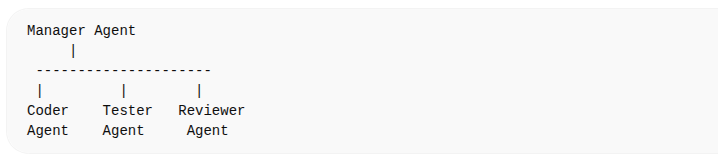
Each agent has a specialized role.
Frameworks
Learn:
-
CrewAI
-
AutoGen
-
LangGraph multi-agent
-
OpenAgents
Example Systems
Build:
AI Software Development Team
Agents:
-
Product manager
-
Architect
-
Developer
-
QA tester
-
Documentation writer
Goal: Autonomous AI workflows.
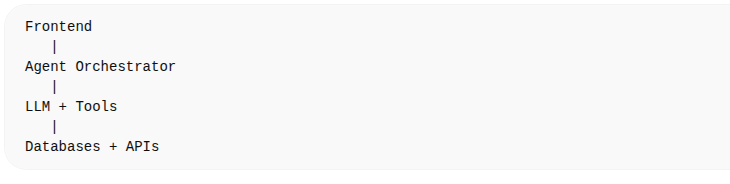
Stage 5 — Production Agent Systems (Enterprise)This is where big companies are heading in 2026.
Enterprise systems need:
-
observability
-
governance
-
guardrails
-
evaluation pipelines
Research shows modern agent architectures separate reasoning from execution through tool interfaces and control loops.
Production Stack
Learn:
-
Docker
-
Kubernetes
-
FastAPI
-
streaming agents
-
event-driven architectures
Infrastructure
Use:
-
Redis
-
Postgres
-
vector DB
-
workflow engines
Example:
 Stage 6 — AI Agent Products (Startup Level)
Once skilled, build AI-native products.
Examples:
SaaS Opportunities
-
AI developer agents
-
AI marketing agents
-
AI ecommerce agents
-
AI SEO agents
-
AI research assistants
Example idea for you:
Magento AI Agent
Features:
-
generate product descriptions
-
SEO optimization
-
automatic catalog tagging
-
customer support agent
-
order analysis
Programming
-
Python
-
APIs
-
async programming
AI Stack
-
LangChain
-
LangGraph
-
CrewAI
-
OpenAI / Claude APIs
Infrastructure
-
Docker
-
Redis
-
vector DB
-
cloud
Engineering
-
workflow orchestration
-
prompt engineering
-
agent evaluation